
After birth, movement can feel both inviting and intimidating. Your body has just completed an intense physical experience, and recovery takes time. Postpartum exercise after birth is not about “getting back in shape”—it’s about supporting healing, rebuilding strength, and reconnecting with your body in a gentle, realistic way.
Movement after having a baby is a quiet act of self-connection. It helps your body heal, gives you a sliver of yourself in this new routine, and can bring a little grounding to the swirl of newborn life (yes, even if you’re still in the same nursing bra three days running).
Why Moving Matters (Beyond Aesthetics)
Here’s the science. The American College of Obstetricians and Gynecologists (ACOG) recommends gentle physical activity once you’re medically cleared, usually around the six-week checkup—though timing depends on your recovery.
And “gentle” is the keyword. Think walking, light stretching, or pelvic floor work. Small, supportive movements can:
- Boost mood and reduce postpartum blues: Regular movement can increase endorphins, your natural mood-lifters, which can ease those unpredictable postpartum swings.
- Improve circulation and healing: Gentle movement helps stimulate blood flow, which supports tissue repair and reduces the risk of blood clots after birth.
- Strengthen pelvic floor and core muscles: Kegels might not be sexy, but they’re essential, particularly if you’d like to sneeze with confidence someday.
- Support mental clarity and stress relief: Whether it’s the rhythm of a stroller walk or a five-minute yoga flow, movement can reset a frazzled brain.
Bonus? Babies are built-in weights. Every sway, bounce, or cuddle is sneakily working your muscles.
Start Small. Seriously.
This is not the part where we recommend a “get your body back” bootcamp. Your body literally went full 3D printer mode and built a human—let’s honor that instead of rushing it.
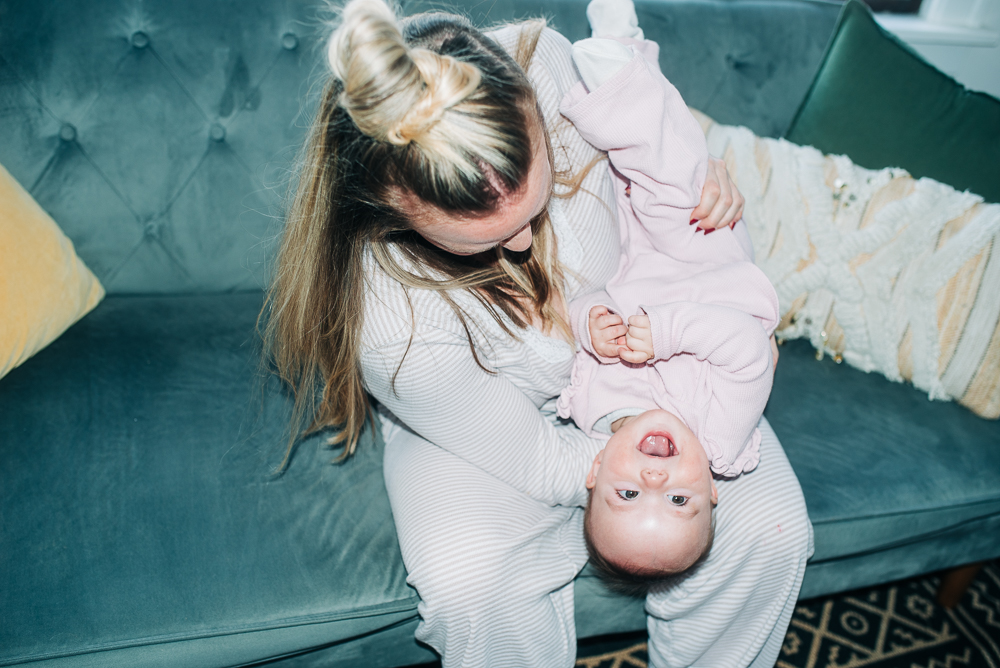
Instead, think in micro-moments. A lap around the block with the stroller? Wins. Five minutes of stretching while baby naps (or at least stays chill in the bouncer)? Win. Playing “airplane” with your baby on your legs while lying on the floor? Yes, also a win.
If you had a C-section, even simple seated stretches or gentle breathing exercises can help support recovery—ask your provider which moves are safe.
If TikTok taught us anything, it’s that you can do a lot in 30 seconds. Movement counts, even in bite-sized bursts.
Ask for Help, Then Actually Accept It
Have your partner strap on the baby while you queue up a postpartum YouTube video. Text a friend to walk with you. See if your local parent group is doing stroller meetups.
Moving with others, virtually or IRL, can be one of the most powerful forms of postpartum support. According to the World Health Organization (WHO), support and connectedness play a huge role in maternal well-being. Plus, walking with another adult might be the closest thing you get to a podcast discussion this week.
But What If You’re Exhausted?
Totally normal. Completely expected. Your body is healing, hormones are swirling, and sleep is… theoretical at best. Sometimes rest is the most important movement your body needs.
As La Leche League puts it: “Listen to your body. Your needs matter too.”
Move gently—like you’d soothe your baby when they’re overtired. Offer yourself the same compassion.
Need support that meets you where you are (and doesn’t care if you’re in yesterday’s sweats)? The Everyboob app offers meditations, hydration tracking, and reminders designed for real postpartum life.
Your Tiny Wins Count
Postpartum exercise after birth is about rebuilding connection with your body in a slow, supportive, and flexible way. Some days that may look like a walk outside. Other days it may simply mean stretching in bed or resting completely.
And we’re cheering for you through every wobble, wiggle, and whoops-I-forgot-I-was-stretching moment.
Movement doesn’t have to be for the Gram. But if you do feel good and snap a selfie? We’re here to hype you up—no AI touch-ups required.
Sources:
- American College of Obstetricians and Gynecologists. 2023. “Physical Activity and Exercise During Pregnancy and the Postpartum Period”
- BMC Pregnancy Childbirth. 2020. “Enhancing patient mobility following cesarean-delivery – the efficacy of an improved postpartum protocol assessed with pedometers”
- World Health Organization. 2022. “WHO guide for integration of perinatal mental health in maternal and child health services.”
- La Leche League International. “In Your Own Words”
