
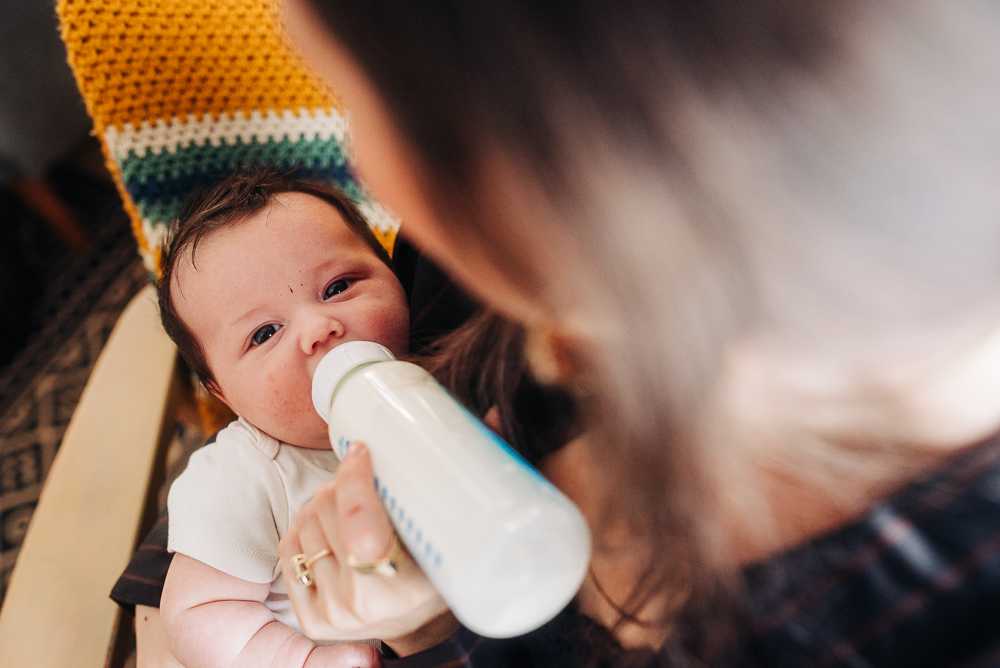
Finding the right breastfeeding positions can make a huge difference in both comfort and feeding success. The way you hold your baby affects latch, milk flow, and how your body feels during and after nursing.
The good news? There are several breastfeeding positions you can try to find what works best for you and your baby.
1. Cradle Hold
The cradle hold is a classic and commonly used position, especially as your baby grows.
- How to Do It:
- Sit upright with your baby’s body facing yours.
- Rest your baby’s head in the crook of your arm on the same side as the nursing breast.
- Support your baby’s bottom or back with your other hand.
- Best For: Full-term babies and older infants who can latch well.
2. Cross-Cradle Hold
This variation of the cradle hold provides more control over your baby’s head, making it ideal for newborns or babies with latching difficulties.
- How to Do It:
- Use the arm opposite the nursing breast to support your baby’s head.
- Hold the back of your baby’s neck and head with your hand while guiding them to latch.
- Your other hand supports the breast.
- Best For: Newborns, preemies, and moms learning to breastfeed.
3. Football Hold (Clutch Hold)
The football hold tucks your baby’s body under your arm like a football, providing excellent visibility and control.
- How to Do It:
- Sit upright and hold your baby’s body along your forearm on the same side as the nursing breast.
- Tuck their legs under your arm and support their head with your hand.
- Use a pillow to support your baby’s weight.
- Best For: Moms recovering from a C-section, twins (to nurse simultaneously), and babies with difficulty latching.
4. Side-Lying Position
The side-lying position is perfect for nursing while resting.
- How to Do It:
- Lie on your side with your baby facing you, belly to belly.
- Use your bottom arm to cradle your baby or rest it under your head.
- Ensure your baby’s head is level with your breast and they latch comfortably.
- Best For: Nighttime feeds, C-section recovery, and when you need to rest.
5. Laid-Back Position
The laid-back position allows your baby to take the lead, often helping with latch and milk flow.
- How to Do It:
- Recline comfortably with pillows supporting your back.
- Place your baby on your chest, tummy down, letting gravity help them latch.
- Support your baby’s head and let them nurse at their own pace.
- Best For: Overactive letdown, newborns, and skin-to-skin bonding.
6. Koala Hold (Upright Position)
The koala hold is ideal for older babies who can support their heads or for moms with a strong letdown reflex.
- How to Do It:
- Sit upright and hold your baby straddling your leg, with their spine straight and head level with your breast.
- Support their back and head as they latch.
- Best For: Babies with reflux or ear infections.
Tips for Success with Breastfeeding Holds
- Support Your Body: Use pillows to support your arms, back, and baby.
- Ensure a Good Latch: Bring your baby to your breast, not the other way around, to avoid strain and improve feeding.
- Switch It Up: Rotate positions to empty different areas of the breast and prevent discomfort.
- Watch for Cues: Ensure your baby’s mouth is wide open, with their lips flanged outward, for a deep latch.
Finding What Works for You
Each baby is different, and some moms find one hold works better than another as their baby grows. Experiment with these positions to discover what feels most natural and comfortable for both of you.
References:
- La Leche League: Breastfeeding Positions (source https://www.llli.org/breastfeeding-info/breastfeeding-positions/https://www.llli.org/breastfeeding-info/breastfeeding-positions/)
- American Academy of Pediatrics: Nursing Techniques (source https://www.healthychildren.org/)
- Office on Women’s Health: Breastfeeding Tips (source https://www.womenshealth.gov/breastfeeding/)
